
What Is Solar Energy and How Does It Work? A Simple Guide for First-Time Buyers in Vadodara
Introduction
Gujarat is one of India’s most industrialised states — a powerhouse of chemicals, pharmaceuticals, textiles, ceramics, and manufacturing that drives a significant portion of India’s GDP. It is also one of India’s most energy-intensive states, drawing heavily from a grid that relies substantially on coal-fired thermal power.
The environmental cost of this energy is invisible on your electricity bill — but very real. Every unit of electricity consumed from Gujarat’s grid releases approximately 0.82 kg of CO₂ into the atmosphere. For an average Vadodara household consuming 400 units per month, that is 330 kg of CO₂ every month — nearly 4 tonnes annually — before accounting for industrial and commercial consumption.
Solar energy fundamentally changes this equation. When your rooftop solar panels generate electricity, they produce zero emissions, zero pollution, zero carbon. The sun’s energy is clean from the moment it strikes your panels to the moment it powers your lights.
This blog explores the environmental benefits of solar energy in Gujarat — what they mean in concrete terms for Vadodara households, businesses, and the broader ecosystem we all share.
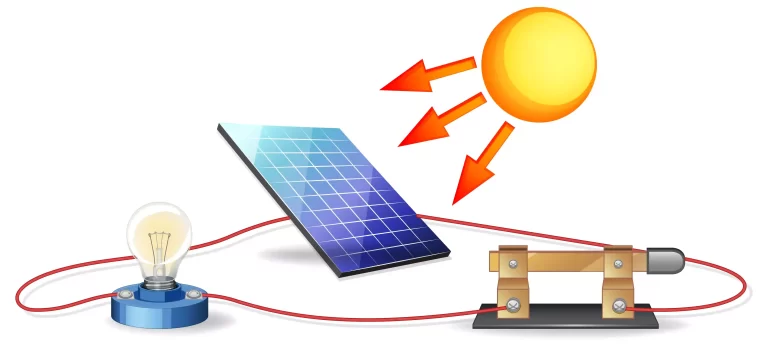
Solar energy is electricity generated from sunlight. The sun radiates an enormous amount of energy every second — far more than humanity currently uses. Solar panels capture a fraction of this energy and convert it directly into electricity through a process called the photovoltaic effect.
The photovoltaic effect was discovered in 1839. But it is modern manufacturing that has made solar panels affordable, efficient, and widely accessible. Today’s solar panels convert 20–24% of sunlight into electricity — and the technology continues to improve.
Why does this matter for Vadodara?
Vadodara receives approximately 5.5–6 peak sun hours per day on average throughout the year. Gujarat is one of India’s sunniest states — with 300+ sunny days annually. This means Vadodara’s solar resource is among the best in the country — and solar panels here generate significantly more electricity per year than equivalent systems in cloudier climates.
How Do Solar Panels Work? The Simple Explanation
Here is how solar energy works in plain language:
Step 1 — Sunlight hits the solar panel Solar panels are made of photovoltaic (PV) cells — typically silicon-based semiconductor materials. When photons (particles of light) from the sun strike these cells, they knock electrons loose from atoms, creating an electrical current. This is the photovoltaic effect.
Step 2 — Solar panels produce DC electricity The electrical current produced by solar cells is Direct Current (DC) — the same type of current produced by batteries. DC electricity flows in one direction and at variable voltage depending on how much sunlight is hitting the panel.
Step 3 — The inverter converts DC to AC Your home and business appliances use Alternating Current (AC) — the type of electricity supplied by DGVCL. The solar inverter converts the DC electricity from your panels into AC electricity that your appliances can use. This happens automatically, continuously, and invisibly.
Step 4 — Your property uses the solar electricity first The AC electricity from the inverter flows into your home or building’s electrical distribution board. Your appliances, lights, AC units, computers, and machinery use this solar electricity directly — in real time. You are not paying DGVCL for this electricity at all.
Step 5 — Surplus goes to the DGVCL grid When your solar system generates more electricity than your property is using at that moment — typically on bright afternoons when generation peaks and some loads are lower — the surplus electricity flows out through your electricity meter into the DGVCL grid.
Step 6 — Net metering credits what you export Your bidirectional net meter records what you export to the grid. DGVCL credits these units against your future imports. Your monthly bill reflects only the net difference — imported units minus exported units. In many months, this results in ₹0 electricity bills.
That is solar energy, explained simply. Light in → electricity out → bills down.
What Are the Main Components of a Solar System?
When Ascent Energy installs a solar system in your Vadodara home or business, here are the components:
- Solar Panels (PV Modules) The panels on your roof. Each panel contains dozens of PV cells connected together. Modern panels produce 400–600 watts each. A typical 3 kW home system has 6–8 panels.
- Solar Inverter The central control unit that converts DC to AC and manages the system. Modern inverters also have built-in monitoring and WiFi connectivity so you can track your system from a smartphone app.
- Mounting Structure Aluminium or galvanised steel frames that hold your panels on the roof at the optimal angle (22–24° in Vadodara) for maximum sunlight capture throughout the year.
- DC and AC Wiring The cables connecting your panels to the inverter (DC side) and the inverter to your distribution board (AC side). Ascent Energy uses UV-resistant, weatherproof cabling rated for 25+ year outdoor use.
- Bidirectional Meter Installed by DGVCL after Ascent Energy applies for net metering on your behalf. Measures both your solar exports and grid imports to calculate your net monthly bill.
- Monitoring System Most modern inverters include cloud-based monitoring. You can see exactly how much electricity your system is generating, how much you are consuming from solar vs. grid, and what your savings are — all from your mobile.
What Types of Solar Systems Are Available in Vadodara?
Type 1 — On-Grid Solar System (Most Popular)
The standard, most cost-effective choice for most Vadodara homes and businesses.
How it works: Solar panels → Inverter → Your property → Surplus to DGVCL grid (with net metering)
Key features:
- No batteries needed — lower cost
- Net metering earns credits for surplus solar
- Eligible for PM Surya Ghar subsidy (residential)
- Automatically shuts down during power cuts (safety)
- Best for properties with reliable grid supply
Best for: Most Vadodara homes, offices, shops, and industrial units with stable grid supply.
Type 2 — Off-Grid Solar System
Completely independent of DGVCL. No grid connection.
How it works: Solar panels → Charge controller → Battery bank → Inverter → Your property
Key features:
- 100% energy independence
- Batteries store power for evenings and nights
- Higher upfront cost (batteries are expensive)
- Not eligible for net metering or subsidies
- No grid dependency whatsoever
Best for: Remote farms, rural properties, or sites with no reliable DGVCL supply.
Type 3 — Hybrid Solar System
Combines on-grid benefits with battery backup.
How it works: Solar panels → Hybrid Inverter → Your property AND Battery bank → Grid (for net metering and top-up)
Key features:
- Powers property from solar during day
- Charges battery from surplus solar
- Battery supplies power at night AND during power cuts
- 10 millisecond switchover during DGVCL outages
- Net metering still available for surplus export
- Higher upfront cost than pure on-grid
Best for: Vadodara homes and businesses wanting protection from power cuts plus maximum bill savings.
What Does a Solar System Cost in Vadodara?
Residential solar systems (after PM Surya Ghar subsidy):
System Size | Gross Cost | Subsidy | Net Cost | Annual Savings |
1 kW | ₹75,000–₹90,000 | ₹30,000 | ₹45,000–₹60,000 | ₹8,000–₹12,000 |
2 kW | ₹1,40,000–₹1,70,000 | ₹60,000 | ₹80,000–₹1,10,000 | ₹16,000–₹22,000 |
3 kW | ₹2,10,000–₹2,50,000 | ₹78,000 | ₹1,32,000–₹1,72,000 | ₹25,000–₹35,000 |
5 kW | ₹3,30,000–₹4,00,000 | ₹78,000 | ₹2,52,000–₹3,22,000 | ₹40,000–₹55,000 |
Commercial solar systems (no residential subsidy, but 40% depreciation available):
System Size | Cost Range | Annual Savings |
10 kW | ₹4.5–₹6 lakh | ₹12,000–₹18,000/month |
50 kW | ₹18–₹25 lakh | ₹60,000–₹90,000/month |
100 kW | ₹35–₹48 lakh | ₹1.2–₹1.8 lakh/month |
How Much Will My Solar System Generate in Vadodara?
A simple rule for Vadodara: Each kW of solar capacity generates approximately 4–5 units per day.
This translates to approximately 1,400–1,600 units per kW per year — accounting for seasonal variation, monsoon months, and normal panel degradation.
How to size your system:
- Look at your last 12 DGVCL bills and calculate average monthly consumption
- Divide by 30 to get daily consumption in units
- Divide daily consumption by 4.5 to get the system size needed in kW
- Ascent Energy will refine this based on your roof area and specific consumption pattern
Example: A home consuming 300 units/month needs 300 ÷ 30 ÷ 4.5 = 2.2 kW system. Round up to 3 kW for comfortable coverage with net export surplus.
The Solar Installation Process in Vadodara — Step by Step
Step 1: Free Site Survey (1–2 hours) Ascent Energy’s engineer visits your property. Assesses rooftop area, orientation, shadow analysis, and reviews your electricity bills. No cost, no commitment.
Step 2: Custom Proposal (within 48 hours) You receive a detailed proposal: system size, panel count, layout, cost, subsidy applicable, net metering design, and savings projection for 25 years.
Step 3: Agreement and Documentation You confirm the proposal. Ascent Energy begins PM Surya Ghar subsidy application, DGVCL net metering application, and equipment procurement.
Step 4: Installation (1–3 days) Professional installation by Ascent Energy’s certified team. Mounting, panels, inverter, wiring. Zero disruption to your routine.
Step 5: DGVCL Inspection and Net Meter DGVCL inspects the installation and installs your bidirectional net meter. Your system is live.
Step 6: Subsidy and Monitoring PM Surya Ghar subsidy credited to your bank account (typically within 30 days). Monitoring app set up on your smartphone. Your solar journey begins.
Common Questions from First-Time Solar Buyers in Vadodara
“Will my roof handle the weight of solar panels?” Most RCC rooftops in Vadodara easily handle solar panel loading. Each panel weighs 20–25 kg. A typical 3 kW system adds 140–180 kg total load — spread across a large area. Ascent Energy’s structural assessment confirms suitability before installation.
“What happens if a panel gets damaged by hail or storm?” Quality solar panels are tested to withstand hailstones up to 25 mm at 83 km/h. Gujarat’s weather, including monsoon and occasional hail, is within panel specifications. Ascent Energy’s 5-year workmanship warranty covers any installation-related issues. Panel manufacturers’ product warranty covers manufacturing defects.
“Can I add more panels later?” Yes — solar systems can be expanded. Ascent Energy designs systems with future expansion in mind where rooftop space allows. The inverter capacity may also need upgrading depending on expansion size.
“Will I see savings from day one?” Yes. From the day your system is commissioned and your net meter is installed, you begin generating solar electricity and accruing savings.
Conclusion
Solar energy is simple at its core: sunlight generates electricity, electricity reduces your bills, and the difference goes straight into your savings. For first-time buyers in Vadodara, the key is choosing the right system size, the right components, and the right installation partner.
Ascent Energy has guided hundreds of first-time solar buyers across Vadodara through every step — from their first question to their first ₹0 electricity bill. We make solar straightforward, transparent, and genuinely rewarding.
Ready to go solar in Vadodara? Start with a free site survey.
📞 +91 82007 85076 🌐 ascentenergy.in/contact-us/