
On-Grid vs Off-Grid vs Hybrid Solar System: Which One is Right for Your Home or Business?
Introduction
You have done your research on solar panels. You know the cost, you know the subsidy, you have calculated how many panels your home needs. Then you speak to a solar company and they ask — do you want an on-grid system, an off-grid system, or a hybrid?
Suddenly, three terms you have never had to think about are standing between you and your decision.
This is one of the most common points of confusion for Indian homeowners and business owners exploring solar for the first time. The three system types differ fundamentally in how they work, what they cost, and what problem they solve. Choosing the wrong type means either overpaying for features you do not need or under-investing in a system that cannot actually meet your requirements.
In this complete comparison guide, Ascent Energy — Vadodara’s leading solar installation company with 12+ years of experience — explains exactly how each system type works, what it costs, who it is best suited for, and which one makes the most financial sense for different types of properties in India.
By the end of this article, you will know exactly which solar system type is right for your home or business — and why.
Before diving into the detailed comparison, here is the simplest possible explanation of what separates the three system types:
On-grid solar system: Connected to the electricity grid. Works only when the grid is available. No battery storage. Surplus solar electricity is exported to the grid and credited to your bill through net metering. The most affordable option.
Off-grid solar system: Completely independent of the electricity grid. Runs entirely on solar power stored in batteries. No grid connection at all. Most expensive option. Designed for locations where grid electricity is unavailable or extremely unreliable.
Hybrid solar system: The best of both worlds. Connected to the grid AND equipped with battery storage. Can use solar power, stored battery power, and grid power interchangeably. Provides backup during power cuts while still benefiting from net metering. Mid-range cost — more than on-grid, less than off-grid for equivalent backup capacity.
Now let us look at each system in depth.
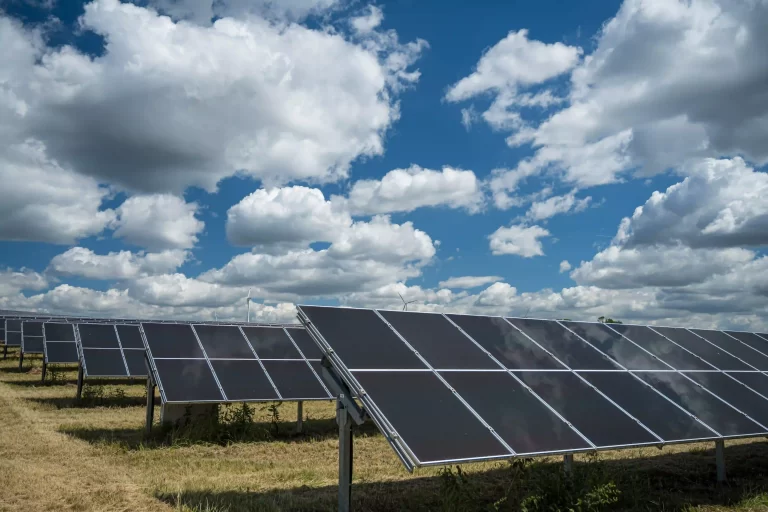
On-Grid Solar System — How It Works, Pros, Cons & Best For
How It Works
An on-grid solar system — also called a grid-tied system — consists of solar panels, a string inverter, mounting structure, and the associated wiring. There is no battery storage. The system is directly connected to your home’s electrical circuit and simultaneously to the DISCOM grid through a net meter.
During the day, your solar panels generate electricity. This electricity powers your home’s appliances directly and in real time. If your panels generate more electricity than your home is consuming at that moment — for example, on a bright afternoon when most family members are at work — the surplus flows back into the grid. The net meter records this export, and your DISCOM credits it against your future electricity consumption.
At night — or on heavily overcast days when solar generation is low — your home draws electricity from the grid as normal. The net metering credits you have accumulated offset this grid consumption on your monthly bill.
The critical limitation of an on-grid system is that it does not work during a power cut. This is not a malfunction — it is a deliberate safety feature called anti-islanding protection. When the grid goes down, your on-grid inverter automatically shuts down to prevent solar electricity from flowing into the grid while workers may be repairing the lines. This protects linemen and utility workers from electrical hazards.
Advantages of an On-Grid System
Most affordable solar option — no battery cost means significantly lower upfront investment.
Eligible for full PM Surya Ghar subsidy of up to ₹78,000.
Highest financial return on investment when grid supply is reliable — every unit exported earns a net metering credit.
Simple system with fewer components — lower maintenance, higher reliability, longer lifespan.
Fully scalable — you can add battery storage later to convert to a hybrid system if your needs change.
Disadvantages of an On-Grid System
No backup during power cuts — your home loses power along with the grid.
Solar generation is wasted during grid outages — your panels are generating but the inverter is shut down.
Fully dependent on net metering policy — if net metering tariffs or policies change in the future, your returns may be affected.
Best For
Homes and businesses in urban and semi-urban areas with reliable grid supply — fewer than 2 to 4 hours of load shedding per day.
Properties where the primary goal is reducing electricity bills and achieving the fastest payback period.
Homeowners who want the most affordable entry into solar with the option to add batteries later.
Commercial and industrial properties with consistent grid supply and high daytime electricity consumption.
In Vadodara, where DGVCL generally provides a stable grid supply in most residential areas, an on-grid system is the right choice for the majority of homeowners focused on financial returns.
Off-Grid Solar System — How It Works, Pros, Cons & Best For
How It Works
An off-grid solar system has no connection to the electricity grid whatsoever. It is a completely independent power system consisting of solar panels, a charge controller, a large battery bank, and an inverter that converts the battery’s stored DC power into AC electricity for your appliances.
During the day, the solar panels generate electricity that simultaneously powers your appliances and charges the battery bank. At night or on cloudy days, the inverter draws stored energy from the battery bank to power your home.
Because there is no grid backup, the system must be sized to generate and store enough electricity to meet your home’s total consumption — including nights, cloudy days, and extended periods of poor weather. This requires a significantly larger panel array and a large, expensive battery bank compared to an on-grid system of equivalent consumption coverage.
Advantages of an Off-Grid System
Complete energy independence — no electricity bills, no grid dependency whatsoever.
Works in locations where grid electricity is unavailable — remote villages, agricultural land, forest areas, and isolated industrial sites.
Immune to grid failures, load shedding, and power cuts — your home runs continuously regardless of what happens to the grid.
No net metering complications — you are entirely self-sufficient.
Disadvantages of an Off-Grid System
Highest upfront cost — large battery banks are expensive, and the system must be oversized to handle periods of low sunlight.
Batteries require regular maintenance and replacement — typically every 5 to 10 years depending on battery type, adding to the lifetime cost.
Not eligible for PM Surya Ghar subsidy — the scheme requires grid connectivity and net metering.
If consumption exceeds system capacity during an extended cloudy period, you may experience power shortage with no grid backup to fall back on.
Generally delivers a lower financial return on investment than on-grid systems in areas where reliable grid supply is available.
Best For
Properties in remote locations with no grid connectivity — agricultural pumps, farm houses, remote offices, and village homes without reliable grid access.
Industrial or commercial facilities in areas with extremely unreliable grid supply — more than 8 to 10 hours of daily load shedding.
Properties where total energy independence is a non-negotiable requirement regardless of cost.
Telecom towers, border outposts, and other critical infrastructure in off-grid locations.
For the vast majority of urban and semi-urban homeowners and businesses in Vadodara and Gujarat — where grid supply is reasonably reliable — an off-grid system is not the optimal choice. The high cost, battery maintenance, and ineligibility for subsidy make it financially inferior to on-grid or hybrid alternatives.
Hybrid Solar System — How It Works, Pros, Cons & Best For
How It Works
A hybrid solar system combines the features of both on-grid and off-grid systems. It is connected to the electricity grid like an on-grid system — but it also includes a battery bank for backup storage like an off-grid system.
The hybrid inverter — the heart of the system — intelligently manages three energy sources simultaneously: solar panels, battery storage, and the grid. It follows a priority logic:
First, solar power runs your home’s appliances directly.
Surplus solar electricity charges the battery bank.
Once the battery is fully charged, any remaining surplus is exported to the grid and credited through net metering.
At night or during cloudy periods, the battery discharges to power your home — reducing or eliminating your grid consumption.
During a power cut, the system automatically switches to battery backup within milliseconds — your appliances continue running without interruption, as long as the battery has sufficient charge.
When the battery is depleted and the grid is unavailable simultaneously — in an extended power cut during a heavily overcast period — the system prioritises any available solar generation to keep essential appliances running.
Advantages of a Hybrid System
Best of both worlds — financial savings through net metering combined with energy security through battery backup.
Uninterrupted power supply during load shedding and power cuts.
Maximises self-consumption of solar electricity — battery storage allows you to use solar power you generate during the day at night, reducing grid dependency.
Eligible for PM Surya Ghar subsidy on the solar panel component.
Future-proof — as battery costs continue to fall, the economics of hybrid systems are improving rapidly.
Particularly valuable for homes and businesses with critical power needs — medical equipment, data servers, refrigeration, security systems.
Disadvantages of a Hybrid System
Higher upfront cost than on-grid — battery banks add ₹50,000 to ₹2,00,000+ to the system cost depending on capacity.
Batteries require replacement over the system’s lifetime — adding to long-term costs.
More complex system with more components — slightly higher maintenance requirements.
Backup duration is limited by battery capacity — a typical home battery bank provides 4 to 8 hours of backup for essential loads.
Best For
Homes and businesses in areas with moderate to frequent load shedding — 2 to 6 hours per day.
Properties with critical power requirements where interruption is unacceptable — clinics, pharmacies, data centres, cold storage, security systems.
Homeowners who want complete peace of mind — solar savings during the day and uninterrupted power at night and during outages.
Businesses that run critical operations during evening hours and cannot rely on the grid alone.
Homes considering future EV ownership — hybrid systems with larger battery banks can be configured to charge electric vehicles from stored solar electricity overnight at minimal cost.
Ascent Energy designs and installs customised hybrid solar systems for homes and businesses across Vadodara and Gujarat — with battery bank sizing tailored to your specific backup duration requirement and budget.
Side-by-Side Comparison — On-Grid vs Off-Grid vs Hybrid
Grid connection: On-grid — yes. Off-grid — no. Hybrid — yes.
Battery storage: On-grid — no. Off-grid — yes, large bank. Hybrid — yes, moderate bank.
Works during power cuts: On-grid — no. Off-grid — yes. Hybrid — yes, up to battery capacity.
Net metering benefit: On-grid — full benefit. Off-grid — not applicable. Hybrid — partial benefit.
PM Surya Ghar subsidy: On-grid — fully eligible. Off-grid — not eligible. Hybrid — eligible on panel component.
Upfront cost for equivalent consumption coverage: On-grid — lowest. Off-grid — highest. Hybrid — medium.
Maintenance requirement: On-grid — lowest. Off-grid — highest. Hybrid — medium.
Best grid supply condition: On-grid — reliable grid. Off-grid — no grid available. Hybrid — moderate load shedding.
Financial return on investment: On-grid — highest in reliable grid areas. Off-grid — best only where no grid available. Hybrid — excellent in areas with regular outages.
Recommended for Vadodara urban homes: On-grid — most homeowners. Off-grid — not recommended. Hybrid — areas with frequent load shedding.
Which System is Right for You? — A Simple Decision Guide
Use this practical guide to identify the right system type for your situation:
Your area has reliable grid supply with rare or no load shedding, and your primary goal is reducing your electricity bill as cost-effectively as possible: On-grid system is the right choice. Maximum subsidy, fastest payback, simplest system.
Your property is in a remote location with no grid connectivity, or your area experiences 8+ hours of load shedding daily: Off-grid system is your only practical option. Size the battery bank generously to cover cloudy day periods.
Your area experiences regular load shedding of 2 to 6 hours daily, or you have critical power requirements that cannot be interrupted, or you want energy independence combined with grid savings: Hybrid system is the right choice. The additional battery investment is justified by both the backup benefit and the improved self-consumption of solar power.
You are unsure about your area’s grid reliability or have mixed requirements: Ascent Energy recommends starting with an on-grid system and choosing a hybrid-ready inverter — one that supports battery addition in the future. This way you get the lowest upfront cost today with the option to add batteries later if your situation changes.
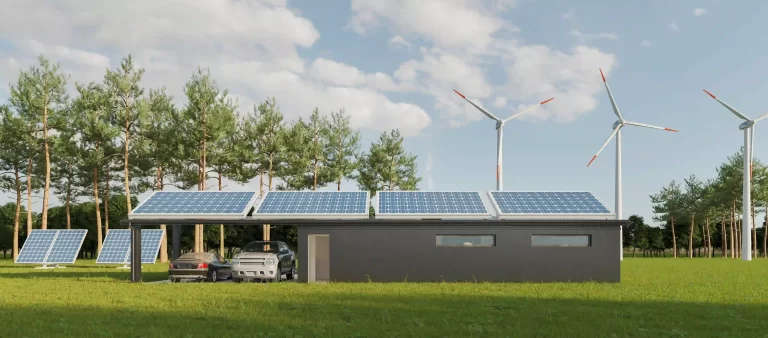
How Battery Capacity Affects Hybrid System Cost
Battery capacity is measured in kWh (kilowatt hours) — the amount of energy a battery can store. Choosing the right battery capacity for your hybrid system depends on two factors: how long you want backup during a power cut, and how much of your nighttime consumption you want to cover from stored solar power.
As a practical reference for Vadodara homes:
5 kWh battery bank: Provides approximately 3 to 5 hours of backup for a home running essential loads — lights, fans, router, TV, phone charging. Suitable for shorter power cuts. Adds approximately ₹60,000 to ₹90,000 to system cost.
10 kWh battery bank: Provides approximately 6 to 10 hours of essential load backup. Covers overnight consumption for homes that want to run primarily on stored solar power at night. Adds approximately ₹1,20,000 to ₹1,80,000 to system cost.
15 kWh and above: Full day and night independence in most conditions. Suitable for clinics, businesses, or high-consumption homes in areas with extended load shedding. Cost varies significantly by battery technology — lithium iron phosphate (LiFePO4) batteries are the recommended choice for Indian conditions due to their thermal stability, long cycle life (3,000 to 6,000 cycles), and safety.
Ascent Energy designs hybrid systems with the precise battery capacity that matches your backup duration requirement and budget — avoiding the common mistake of either undersizing (leading to frequent battery depletion) or oversizing (paying for capacity you never use).
Frequently Asked Questions
Q. Can I convert my existing on-grid system to a hybrid system later?
Q. Which battery technology is best for Indian conditions?
Q. Does a hybrid system charge the battery from the grid as well as from solar?
Q. Is a hybrid system worth the extra cost in Vadodara?
Q. Can a hybrid system power an air conditioner during a power cut?
Conclusion
The choice between on-grid, off-grid, and hybrid solar comes down to three questions — how reliable is your grid supply, what is your tolerance for power cuts, and what is your budget?
For most homeowners in Vadodara and Gujarat with a reasonably reliable grid, an on-grid system delivers the best combination of affordability, subsidy eligibility, and financial returns. For those in areas with regular load shedding or with critical power requirements, a hybrid system is the smarter long-term investment. Off-grid systems serve a specific niche — primarily locations where the grid simply does not reach.
There is no universally correct answer — the right system is the one that matches your specific home, location, consumption pattern, and priorities. That is exactly why Ascent Energy begins every customer engagement with a thorough site assessment and needs analysis before recommending any system.
Get a free consultation and system recommendation from Ascent Energy today. Our certified engineers will assess your home, analyse your requirements, and design the solar system that delivers the best returns for your specific situation.
📞 Call: +91 82007 85076 📧 Email: energyascent@gmail.com 🌐 Get Your Free Solar Assessment → ascentenergy.in/contact-us/