
How Solar + Battery Storage Is Solving Power Intermittency in India
Introduction: The Hidden Challenge of Solar Power in India
Solar energy adoption in India has grown rapidly over the last decade. From residential rooftops to large industrial installations, solar power is now a mainstream energy choice. However, despite its benefits, one major issue continues to limit its full potential: power intermittency.
Solar panels generate electricity only when sunlight is available. At night, during cloudy weather, or in case of grid failures, solar generation drops or stops completely. This creates dependency on the electricity grid or diesel generators, especially for homes, businesses, and industries that require uninterrupted power.
This is where solar + battery storage systems are transforming the energy landscape. By storing excess solar energy and making it available when needed, battery storage is solving the biggest weakness of solar power in India.
Understanding Power Intermittency in India
Power intermittency refers to the inconsistent availability of electricity due to supply fluctuations. In India, this issue is common due to:
- Frequent power cuts in many regions
- Grid instability and voltage fluctuations
- Peak demand shortages
- Dependence on fossil-fuel-based backup systems
Even in urban areas, unexpected outages can disrupt daily life and business operations. For industries, power interruptions can cause production losses, equipment damage, and increased operational costs.
Solar energy reduces electricity bills, but without storage, it does not fully eliminate these problems.
Why Solar Alone Is Not Enough
- No power during outages
- No solar usage at night
- Continued dependency on grid or diesel generators
To overcome these limitations, energy storage is essential.
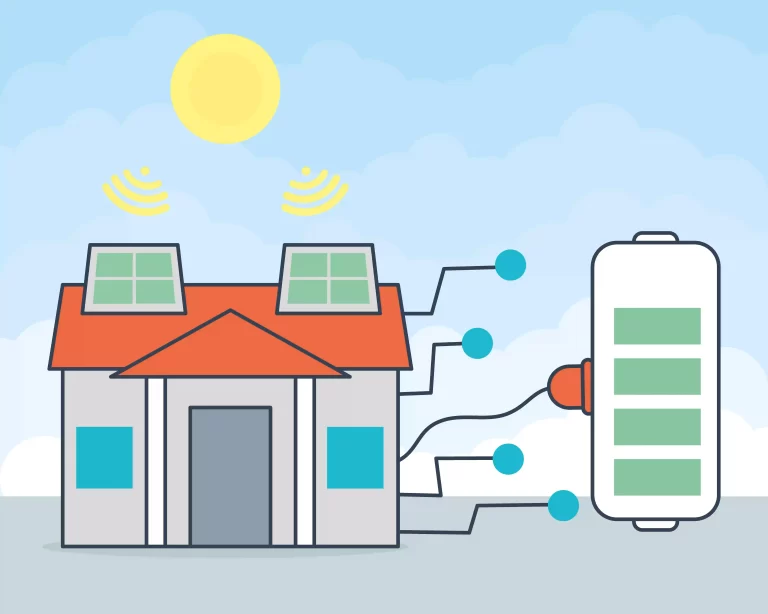
What Is Solar Battery Storage?
- Solar panels generate electricity
- Excess energy charges the batteries
- Stored energy powers your home or business anytime
This combination ensures continuous power availability, regardless of grid conditions or sunlight availability.
How Solar + Battery Systems Work
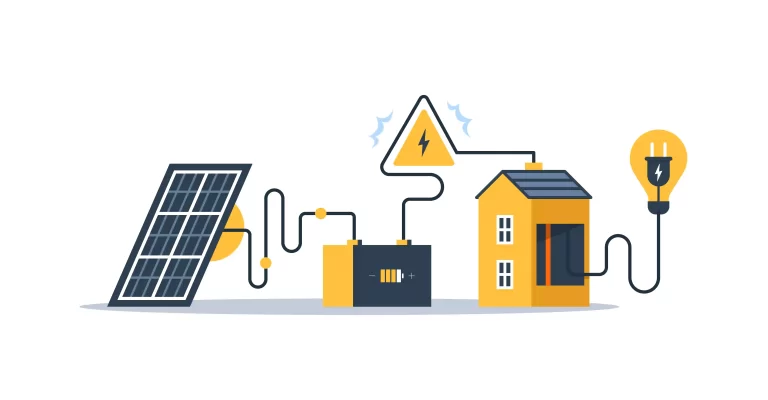
- Solar panels produce DC electricity
- An inverter converts DC to usable AC power
- Electricity runs household or commercial loads
- Excess energy charges the battery system
- Stored energy is used during outages or at night
Types of Solar Battery Systems
1. On-Grid Solar With Battery Backup
- Grid-connected system
- Battery used mainly for power cuts
- Suitable for homes and small offices
2. Hybrid Solar Systems
- Solar + Grid + Battery
- Intelligent energy management
- Ideal for residential and commercial users
3. Off-Grid Solar Systems
- No grid connection
- Completely energy independent
- Used in remote locations, farms, and resorts
Types of Solar Batteries Used in India
Lithium-Ion Batteries
- High efficiency and fast charging
- Long lifespan (8–12 years)
- Low maintenance
- Compact and lightweight
Lithium Iron Phosphate (LiFePO4)
- Safer than standard lithium batteries
- Excellent performance in Indian climates
- Longer cycle life
- Growing adoption in 2025 and beyond
Lead-Acid Batteries
- Lower upfront cost
- Shorter lifespan
- Higher maintenance requirements
Gradually being replaced by lithium options
Why Solar + Battery Storage Is Ideal for India
Reliable Power During Outages
Battery storage ensures uninterrupted electricity during power cuts, eliminating dependence on inverters or diesel generators.
Lower Electricity Bills
Stored solar energy reduces reliance on high-cost grid power during peak hours.
Reduced Diesel Generator Usage
Battery systems replace noisy, polluting, and expensive diesel generators with clean energy.
Grid Independence
Energy storage protects users from voltage fluctuations and unstable grid supply.
Residential Benefits of Solar Battery Storage
For homes and apartments, solar + battery systems provide:
- Power backup without separate inverters
- Silent and clean operation
- Reduced monthly electricity bills
- Increased energy independence
A properly sized system can power lighting, fans, refrigerators, internet, and essential appliances during outages
Commercial and Industrial Benefits
For offices, hospitals, schools, factories, and warehouses:
- Zero downtime for critical operations
- Lower operational costs
- Reduced demand charges
- Improved equipment protection
Battery storage allows businesses to perform peak shaving and load shifting, significantly optimizing energy costs.
Solar + Storage for Agriculture and Rural Areas
- Irrigation pumps
- Cold storage units
- Dairy farms
- Remote agricultural facilities
They provide reliable power without dependency on erratic grid supply or fuel availability.
Cost and ROI of Solar Battery Storage in India
The cost of solar battery storage depends on:
- Battery type and capacity
- Backup duration required
- Load size
- Usage pattern
Although lithium batteries have a higher initial cost, their longer lifespan and lower maintenance offer better long-term returns.
Savings come from:
- Reduced electricity bills
- Elimination of diesel costs
- Lower maintenance expenses
- Improved operational efficiency
The Future of Solar Energy in India
With declining battery costs and rising electricity tariffs, solar + storage is becoming the future of energy in India. Government policies, technological advancements, and increasing awareness are accelerating adoption across residential, commercial, and industrial sectors.
Energy independence is no longer a luxury. It is becoming a necessity.
Conclusion
Solar energy alone reduces electricity bills, but solar combined with battery storage delivers true reliability and independence. By addressing power intermittency, battery storage transforms solar into a 24/7 energy solution.
For Indian homes, businesses, and industries, investing in solar + battery systems is a future-proof decision that delivers long-term savings, stability, and sustainability.