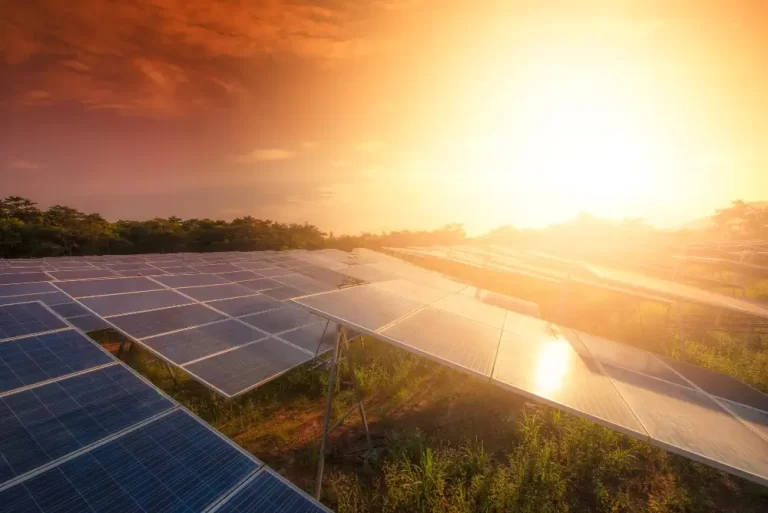
Introduction: A Greener Vision for India
In 2026, India stands at a pivotal crossroads. As one of the world’s fastest-growing economies, our demand for power is skyrocketing. However, the traditional method of meeting this demand—burning coal—comes with a heavy price: air pollution, rising temperatures, and unpredictable weather patterns.
At Ascent Energy, we believe that every solar panel installed on a rooftop in Vadodara or a factory in Gujarat is a victory for the planet. While the financial ROI is undeniable, the environmental benefits of solar energy are the true driving force behind India’s mission to achieve Net Zero by 2070. This blog explores how switching to solar helps heal our ecosystems, conserve our resources, and protect our future. solar company in vadodara
1. Drastic Reduction in Carbon Footprint
The most significant contribution of solar power is its ability to displace carbon-heavy energy sources.
- The Coal Crisis: India still relies on coal for a significant portion of its electricity. For every 1 unit (kWh) of electricity produced by coal, approximately 0.82 kg of CO2 is released into the atmosphere.
- The Solar Solution: Solar panels produce zero emissions during operation. A typical 5kW residential system from Ascent Energy can prevent nearly 6 tonnes of CO2 from entering the atmosphere every single year.
- The 25-Year Impact: Over its lifespan, a single home solar setup offsets more than 150 tonnes of CO2—equivalent to planting over 2,500 trees or removing 30 cars from the road for a year.
2. Protecting Our Air Quality
Unlike thermal power plants, which emit sulfur dioxide (SO2), nitrogen oxides (NOx), and particulate matter (PM2.5), solar energy is “silent and clean.”
- Health Benefits: By reducing the demand for coal-fired power, solar energy directly contributes to clearer skies and better respiratory health for our communities.
- Urban Cooling: Large-scale solar adoption in cities helps mitigate the “Urban Heat Island” effect. Reflective and energy-absorbing panels can actually help regulate building temperatures compared to traditional dark concrete roofs.
3. Water Conservation: The Silent Benefit
Many people don’t realize that traditional power generation is an incredibly “thirsty” process.
- Thermal Power’s Water Guzzle: Coal and nuclear plants require millions of gallons of water for cooling. In a water-stressed country like India, this places an immense burden on our rivers and groundwater.
- Solar’s Dry Operation: Solar Photovoltaic (PV) technology requires zero water to generate electricity. Aside from occasional cleaning (which Ascent Energy optimizes with water-efficient techniques), solar energy leaves our precious water resources for agriculture and drinking.
4. Reducing Hazardous Waste and Mining Impact
The lifecycle of fossil fuels begins with destructive mining. Coal mining leads to deforestation, soil erosion, and the contamination of local water bodies through acid mine drainage.
- No Extraction Required: Once a solar system is installed, it requires no fuel. There are no pipelines, no tankers, and no coal trains.
- 2026 Circular Economy: In 2026, the solar industry has moved toward a “Circular Economy.” At Ascent Energy, we use panels that are up to 90% recyclable. Silicon, glass, and aluminum can be reclaimed and reused, minimizing the need for new raw material extraction.
5. Preserving Biodiversity & Land Use Efficiency
One of the criticisms of solar is the land it occupies. However, in 2026, innovative solutions have turned this into a benefit:
- Rooftop Utilization: By using existing rooftops (Residential and Industrial), we generate power without occupying a single inch of new land.
- Agrivoltaics: We are now seeing the rise of solar-plus-farming, where panels are elevated to allow crops to grow underneath. The shade from the panels reduces water evaporation from the soil, creating a symbiotic relationship that boosts crop yields.
6. Fighting Climate Change in Real-Time
Climate change isn’t a future threat—it’s a current reality. From the heatwaves in Gujarat to the erratic monsoons across the Deccan, the symptoms are everywhere.
- Global Cooling: Every megawatt of solar power produced reduces the “Greenhouse Effect.” By choosing Ascent Energy, you are directly participating in the global effort to keep temperature rises below 1.5°C.
- Energy Resilience: Solar energy provides decentralized power. This means that during climate-related disasters, solar-plus-storage systems keep essential services running, making our communities more resilient.
7. Supporting India’s National Green Goals
India’s National Solar Mission and the PM Surya Ghar: Muft Bijli Yojana are world-leading initiatives. When you go solar, you aren’t just helping yourself; you are helping India meet its international commitments under the Paris Agreement.
- The 500GW Goal: India aims for 500GW of non-fossil capacity by 2030. Your installation is a building block of that national dream.
Why Ascent Energy is the Eco-Conscious Choice
Not all solar installations are created equal. To maximize the environmental benefit, you need high-efficiency systems that last.
- Tier-1 Components: We only use premium, high-efficiency panels that produce more power per square foot, reducing the “embedded carbon” of the system.
- Expert Engineering: Our designs ensure your system operates at peak performance for 25+ years, maximizing the amount of “dirty” energy you offset.
- Local Expertise: Based in Vadodara, we understand the local climate and optimize every system for the specific sunlight patterns of the region.
Conclusion: Be the Change You Want to See
The environmental benefits of solar energy are a gift to the next generation. It is the only investment that pays you back in cash and in a cleaner, safer world.