Introduction: EVs Are Growing, But the Power Question Remains
India’s electric vehicle (EV) adoption is accelerating rapidly. From two-wheelers and passenger cars to buses and commercial fleets, electric mobility is becoming a national priority. However, one critical question remains largely unaddressed:
How clean is electric mobility if EVs are charged using fossil-fuel-based electricity?
If EV charging depends on coal-powered grids, the environmental benefit reduces significantly. This is where solar-powered EV charging infrastructure becomes essential. By integrating solar energy with EV charging stations, India can create a truly sustainable and future-ready mobility ecosystem.
Why Solar + EV Charging Is a Natural Fit
Solar energy and electric vehicles complement each other perfectly.
- Solar produces clean electricity
- EVs consume electricity instead of fossil fuels
- Daytime solar generation aligns with vehicle parking hours
- Solar reduces grid dependency and charging costs
Together, they form a closed-loop clean energy system.
The Current Challenge With EV Charging in India
Despite growing EV adoption, charging infrastructure faces multiple challenges:
- Limited public charging stations
- High grid load during peak hours
- Rising electricity tariffs
- Inconsistent power supply in some regions
- High operational cost for charging operators
Relying solely on grid electricity makes EV charging expensive and less sustainable in the long run.
What Is Solar-Powered EV Charging?
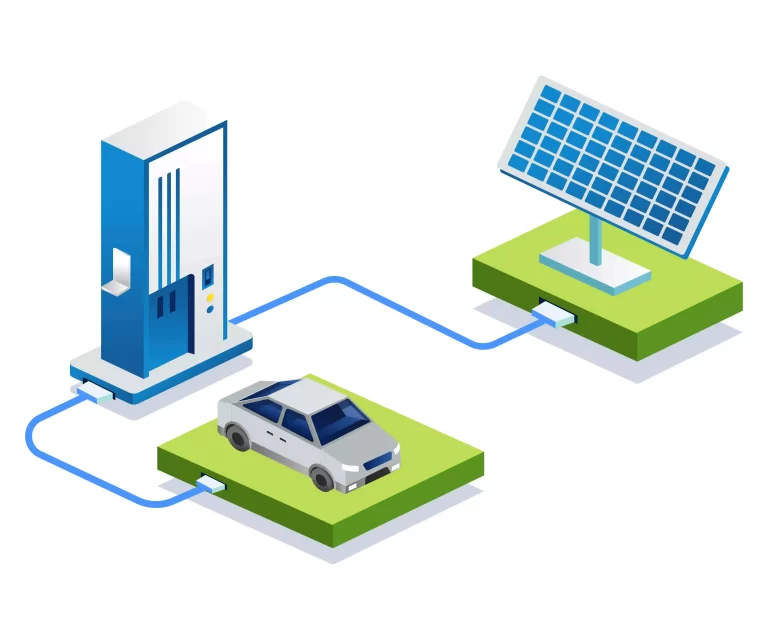
Solar-powered EV charging uses solar panels to generate electricity that is used to charge electric vehicles either directly or through energy storage systems.
A typical system includes:
- Solar panels
- Inverters
- EV chargers
- Battery storage (optional but recommended)
- Grid connection (hybrid setups)
Types of Solar EV Charging Systems
1. Grid-Tied Solar EV Charging
- Solar panels supply power to EV chargers
- Excess power exported to grid
- EVs charged primarily during daytime
Best for commercial buildings, offices, and parking lots.
2. Solar EV Charging With Battery Storage
- Solar energy stored in batteries
- EVs can be charged day or night
- Reduced grid dependency
Ideal for high-usage and public charging stations.
3. Off-Grid Solar EV Charging
- Fully independent from grid
- Suitable for highways and remote locations
- Higher initial investment
Benefits of Solar-Powered EV Charging
1. Truly Clean Mobility
Charging EVs using solar ensures zero-emission transportation from source to wheel.
2. Lower Charging Costs
Solar reduces dependence on expensive grid electricity, improving long-term profitability for charging operators.
3. Grid Load Reduction
Solar-powered charging reduces pressure on local electricity infrastructure, especially during peak demand.
4. Faster ROI for Charging Stations
Energy cost savings significantly improve return on investment for EV charging projects.
5. ESG and Sustainability Compliance
Solar EV charging aligns with corporate sustainability goals and regulatory expectations.
Use Cases of Solar EV Charging in India
Residential Societies
- Rooftop solar for resident EV charging
- Lower electricity bills
- Shared charging infrastructure
Commercial Buildings & Offices
- Employee EV charging
- Reduced operational costs
- Enhanced green building certifications
Public Charging Stations
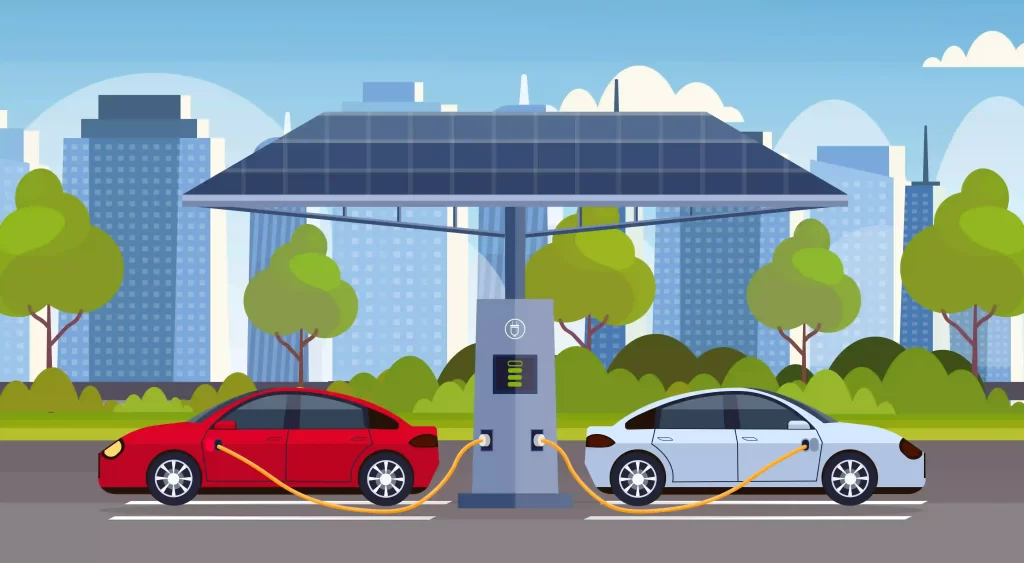
- Solar carports and canopies
- Battery-backed fast charging
- Reduced grid dependency
Fleet Operators & Logistics
- Electric delivery vehicles
- Predictable charging schedules
- High solar utilization
Benefits of Agrivoltaics for India
1. Dual Income for Farmers
Farmers earn from crop production and solar power generation.
2. Improved Crop Yield
Partial shade reduces heat stress and water loss for certain crops.
3. Reduced Water Consumption
Lower evaporation improves soil moisture retention.
4. Farmer Acceptance of Solar
Agrivoltaics removes resistance to solar projects on farmland.
Solar Carports: The Smart EV Charging Solution
Solar carports combine:
- Parking shade
- Solar power generation
- EV charging points
They are space-efficient and ideal for:
- Malls
- Airports
- Offices
- Educational campuses
Role of Battery Storage in Solar EV Charging
Battery storage plays a critical role by:
- Enabling night-time charging
- Supporting fast chargers
- Managing peak loads
- Ensuring power during outages
As battery costs decline, solar + storage + EV charging becomes more viable.
Government Push for Solar and EV Integration
India’s policy framework strongly supports:
- Renewable energy expansion
- Electric mobility adoption
- Charging infrastructure development
Incentives and subsidies are driving faster adoption of solar-powered EV solutions.
Challenges in Solar EV Charging Deployment
- High upfront investment
- Space constraints in urban areas
- Technical integration complexity
- Load management for fast chargers
These challenges can be solved with proper system design and experienced EPC execution.
Why EPC Expertise Matters in Solar EV Projects
Solar EV charging projects require:
- Accurate load assessment
- Smart inverter selection
- Battery sizing
- Safety and compliance planning
An experienced EPC partner ensures efficiency, safety, and scalability.
Future of Solar EV Charging in India
Over the next decade:
- Solar carports will become standard
- Battery-backed fast charging will grow
- Fleet electrification will accelerate
- Clean energy integration will be mandatory
Solar-powered EV charging will move from an option to a necessity.
Conclusion
Electric vehicles alone are not enough to achieve sustainable mobility. True transformation happens when EVs are powered by clean energy.
By integrating solar power with EV charging infrastructure, India can reduce emissions, lower energy costs, and build a resilient, future-ready transportation ecosystem.